Questions to Help You Identify Projection in Your Story
If you’re unsure whether your story’s conflict is strengthening your characters’ agency vs. causing them to project responsibility outward, these questions can help you evaluate how well your characters’ arcs are integrating internal conflict and external conflict.
1. Is your protagonist primarily reacting to the antagonist’s actions? Or is your protagonist making progressively more conscious choices that shape the direction of the conflict?
2. Does your protagonist believe the story’s problems exist entirely because of the antagonistic force? Or will the protagonist be forced to confront how personal limitations are affecting the outcome of the conflict?
3. Is your protagonist trying merely to defeat the antagonist? Or is the protagonist being asked to change in order to resolve the story’s central conflict?
4. Does the conclusion of the story’s conflict happen solely because the antagonist is removed? Or does the conflict resolve because the protagonist develops the inner capacity to create a different outcome?
5. Where might your protagonist be giving away personal power by focusing on what cannot be controlled instead of developing what can be controlled from within?
6. What personal responsibility might your protagonist be avoiding by focusing exclusively on the external conflict?
7. In what ways does the antagonist expose personal weaknesses, fears, or misconceptions the protagonist would rather not confront?
8. Does your protagonist earn moral authority through growth and difficult choices? Or is the protagonist gifted legitimacy simply by opposing the villain?
9. Where does your protagonist need to reclaim agency in order for the ending to feel earned?
***
Enduring stories are rarely about the elimination of darkness so much as they are about the growth of consciousness (although, of course, they’re really just the same thing). When we understand conflict this way, we begin to see that the real movement of character arc is always away from projection and toward the reclamation of responsibility. Even when implicit, this profound shift allows a story’s ending to feel not just satisfying, but true.
The above is an excerpt from K.M. Weiland link below
Excerpt of interview with Anya Taylor-Joy


Geraladine Page pictured with Louis Jordan in 1954 in The Immoralists


Ted Turner leaves us
Ted Turner recently died. His impact on our ability to watch TV still continues.
Below is an excerpt from Ted Turner Gave Us Classic Movies, And That’s More Important Now Than Ever
I keenly remember the first time I watched TCM. I was living in Sacramento, and I was either sick or it was raining (it might just have been raining while I was sick). Either way, I was flipping through the channels, eating a grilled cheese with tomato soup, when I stopped on a black and white film. It was 1946’s The Spiral Staircase. I planned to watch a few minutes and ended up watching the entire thing before host Robert Osborne returned to tell me about the movie I’d just seen. It was a moment that quite literally changed my life. The network’s alchemy worked on me and from that point forward there wasn’t a time where I wasn’t watching TCM or at least watching something I’d taped.
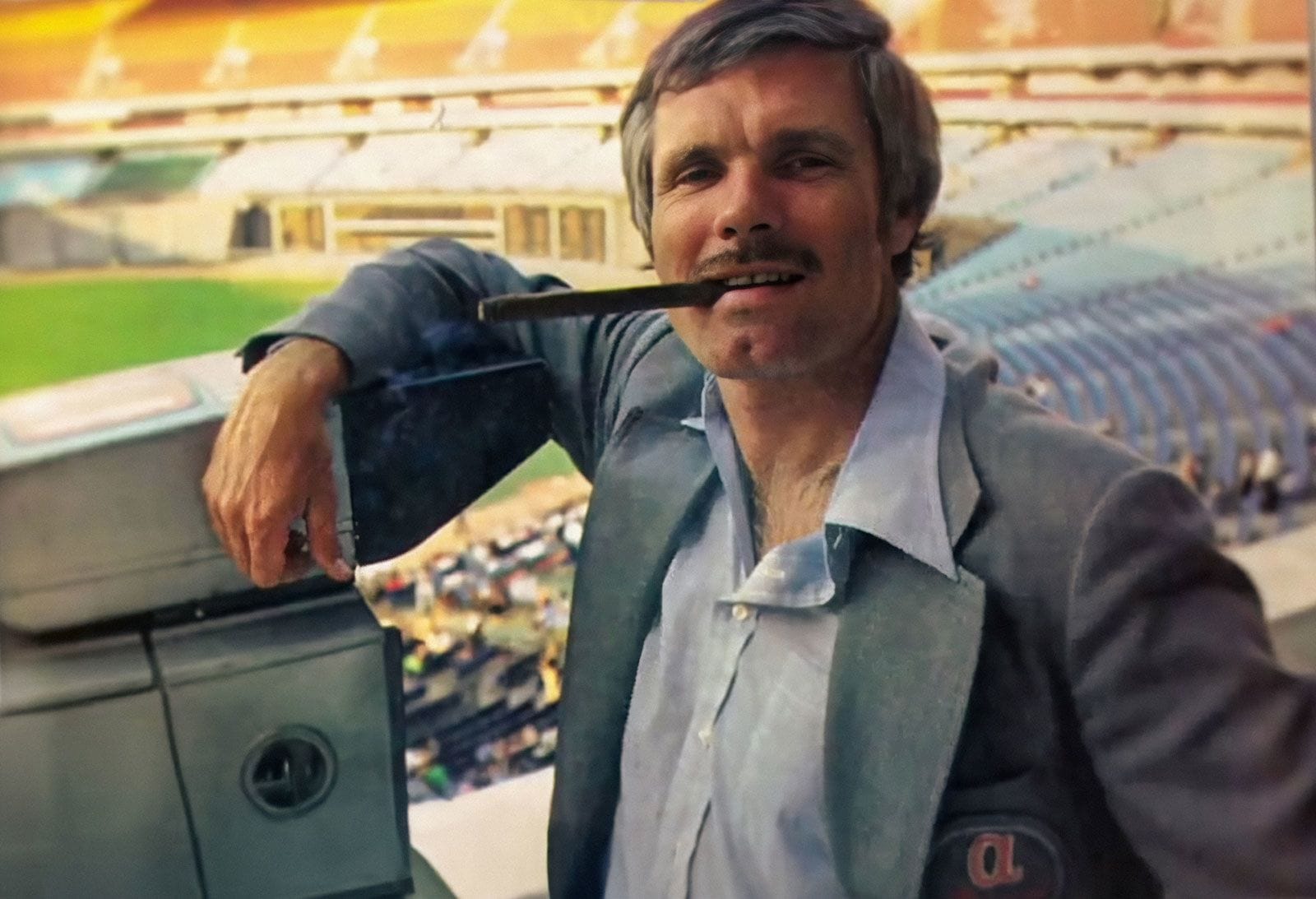
Turner, in a lot of ways, was the ultimate classic film fan. In the mid-1980s he acquired the MGM catalog, including a host of pre-1950 films from Warner Bros., RKO and MGM. Turner wanted to find a way to both preserve the movies he’d acquired, while also giving others opportunities to see them. Can you imagine if Turner had just decided to release on them on physical disc a few times and that’s it? Unlike most linear cable channels, which spend a majority of their budget on licensing content (think of HBO in the 1980s), TCM immediately started with a strong amount of content it already owned, keeping costs down.
More importantly, Turner seemed to genuinely care about the movies themselves. Watching the splashy day TCM premiered in Times Square in 1994 you see Turner flanked by classic film stars like Jane Powell, Arlene Dahl, Van Johnson, and Celeste Holm. The look on his face is one of genuine joy. Couple that with the first few years of TCM. The set Osborne used for his intros and outros doesn’t look expensive, but homey. Turner understood TCM was meant to be an extension of the living room, a place where audiences could watch these classics with someone, like Osborne, who might have been watching in his home as well. Commercial free, the interstitials and interviews had a similar nostalgic feel while presenting in-depth interviews with performers from that time (many of whom were still alive).
Screenwriting
“Some screenwriters, and many playwrights, begin with the emotional story, or inner story…They layer key dramatic moments between the protagonist and antagonist in conflict with each other, creating heightened emotional moments that serve as climaxes and story beats. By intuiting the depth of character conflict, without emphasizing plot and structure, they work through the unconscious movement of the story by way of external character, revealing ‘story’ as a by-product. Tennessee Williams worked this way.”
Kate Wright
Storytelling is Screenwriting
Acting
The only thing that may unite all forms of acting in a sense is no matter what preparation you do, no matter what transformative process you go through, you are always yourself. You are always inside your own skin – you are who you are no matter what the actions of the movement or the effect. You have to have an essential element of you, and that is also what is in the present. Once you’re in the present and you’re not worried about the wig, or the special-effects suit, or the dialogue, or the accent, or the moral responsibility, when you are lost in the moment and you’re in the present is when the stuff that’s really good comes on screen. Until that point, you’ve put in a lot of hard work to then let go, and all of us experience moments – and they’re rare in every job I find – where you feel free of any kind of self-consciousness. Benedict Cumberbatch
Robert Duvall

Krzysztof Kieślowski on why he feels it is immoral to spend a lot of money to make movies: “I don’t believe in absolute freedom. In practice it is impossible, philosophically unacceptable. We direct ourselves to get freedom and every time we realize we can’t reach it. And, looking at it in this way, the goal is not as important as the means of attaining it: it is not possible- thank God!- to achieve our goal.
So, it is obvious that I am favorably disposed to compromise. And not because it is useful. First of all, because I don’t know the answers, and in making films I ask questions. Questions and doubts, lack of self-confidence, curiosity and amazement that everything goes on in a natural way- all this puts me in the position of an observer and a listener. I change my script very often- the scenes, dialogues or situations- because I can see that people around me have better ideas, more intelligent solutions. It doesn’t disturb me that these are other people’s ideas. When I have accepted and chosen them, they become mine.
As a film director I am realistic. I am using the world of events and the world of thoughts, and I treat them equally. I am also realistic in my approach to the work. I respect my producer, money and, above all, my viewer. Not just because I have to. I do so because I want to. In my opinion, the production of a film- however costly- has its own morality. And I am trying to obey this morality, because I want to obey. A cup of coffee may cost 1½ dollars, may cost 3 or 5 dollars, but when it costs 120 dollars, drinking this coffee is immoral. It is exactly the same in the production of films.
The film I want to make is the film I am able to make. There are no others. I don’t think of other films. I don’t have a million viewers waiting at the entrance of the cinema, but I need to feel that someone needs me for something. And even if I make films- like all my colleagues- for myself, I’m looking all the time for somebody who tells me, like a fifteen-year-old girl in France, ‘I saw your ‘Double Life of Veronique’ (1991) Then I want to see it several more times. For the first time in my life I have seen and I have felt that there is something like ‘soul’. So, if I were not concerned about this girl’s opinion, there would be no reason to take the camera out of its box.”
(‘Projections A forum for Filmmakers’, edited by John Boorman and Walter Donohue)


You must be logged in to post a comment.